
Recent Posts


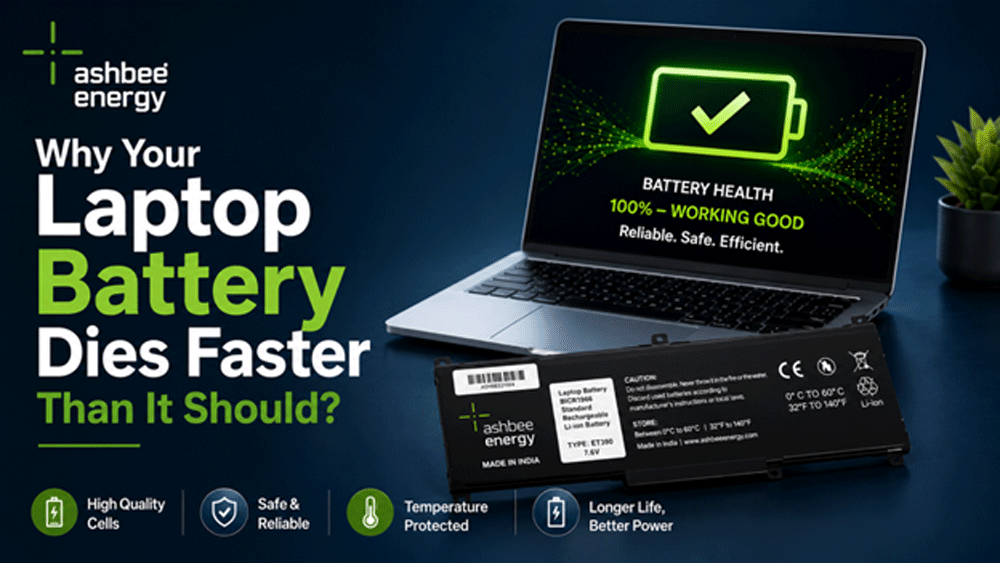
Why Your Laptop Battery Dies Faster Than It Should?
Why does a two-year-old laptop suddenly need charging by lunchtime when it used to last a full workday? Usually, it's not the laptop. It's the battery underneath it quietly losing capacity, cycle by cycle, long before anyone notices.
What's Actually Happening Inside a Lithium-Ion Laptop Battery
While a lithium-ion laptop battery doesn't fail overnight. But it degrades. Most lose somewhere around 20% of their original capacity after 300 to 500 full charge cycles, which for a daily user works out to roughly a year and a half before the drop becomes obvious. Heat speeds that up. So does leaving a laptop plugged in at 100% for hours on end, something most people do without thinking twice.
OEM Laptop Batteries Versus the Cheap Alternatives
OEM laptop batteries cost more upfront, and there's a reason for that. They're built to the exact voltage, cell chemistry, and safety tolerances the original manufacturer specced out. Generic replacements cut corners somewhere, usually in the protection circuit or cell grading, and that's where swelling and sudden shutdowns tend to start. And we at Ashbee Energy manufacture the complete batteries by ourselves as we do for our BESS product line.
When Laptop Battery Replacement Actually Makes Sense
Don't wait until the laptop won't hold charge at all. Laptop battery replacement is worth doing once runtime drops noticeably below what it used to be, especially if the laptop's still otherwise in good shape. A battery swap costs a fraction of a new machine and usually takes less than thirty minutes with the right part in hand.
Here's the thing worth checking before buying: confirm the exact model number, not just the laptop brand. Two laptops from the same series sometimes take completely different battery packs, and a mismatch either won't fit or won't charge safely.
Leave a Reply
Your email address will not be published. Required fields are marked
Comments